 Fresh deals are here at Rotunda Farm Stall!
Stock up on fresh produce, sweet treats, pantry favourites and more, with specials running 7–11 October while stocks last.
PLUS you can get a FREE delivery to Howick!
Order on 033 343 4205 or 033 343 1198
Fresh deals are here at Rotunda Farm Stall!
Stock up on fresh produce, sweet treats, pantry favourites and more, with specials running 7–11 October while stocks last.
PLUS you can get a FREE delivery to Howick!
Order on 033 343 4205 or 033 343 1198
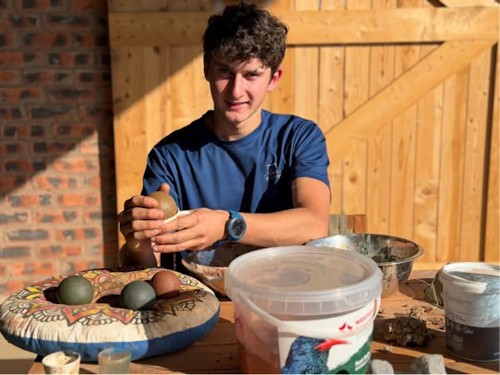 If you are exploring our beautiful Midlands Meander in the last few days of the holidays, be sure to pop into the Zulululu Arthouse at Piggly Wiggly to see the fascinating work of one of our talented students, Ethan Perry.
Ethan creates Hikaru Dorodango, a captivating Japanese art form that transforms humble dirt into mirror-like, polished spheres. Here is how Ethan describes his craft in his own words:
"They look like spheres of polished stone or glazed ceramics, however they are in fact nothing more than balls of mud. My source is just ordinary clay-based dirt... rolled on a ceramic cup into a perfect sphere. There is no polish of any kind, it is simply mud, sand, and sawdust.
It seems impossible that such mundane, and often disliked material can become something so elegant and beautiful.
The artform itself originated in the schools of ancient Japan, where it is thought that school children learnt that by methodically rolling a lump of mud on a cup, they could (with a bit of patience) get these perfectly spherical and very shiny balls. However, the tradition slowly faded into dust, until at the turn of the millennium a Japanese professor of child education stumbled upon the old craft.
It became popular in the early two thousands and has since become just that, a means for many people to let go and get lost in each turn of the sphere from ugly mud to a polished gem.
I discovered the craft in mid-2025. I found a clump of red clay, commonly found in Midlands area under a tap and rolled it into a tiny little ball on the top of a plastic water battle. That night the itch started and ever since I have been consistently making Hikaru dorodango.
Earlier this year the owner of the arthouse noticed my work and was immediately interested in them. I am really grateful to the kindness of Juliette Donkin from Zulululu for letting me show of my work there, it is defiantly not something I would have ever expected to even be a possibility.”
We are incredibly proud of Ethan, not only for his remarkable artistic skill, but for showing us so metaphorically how patience and vision can turn something ordinary and unrefined into something truly beautiful.
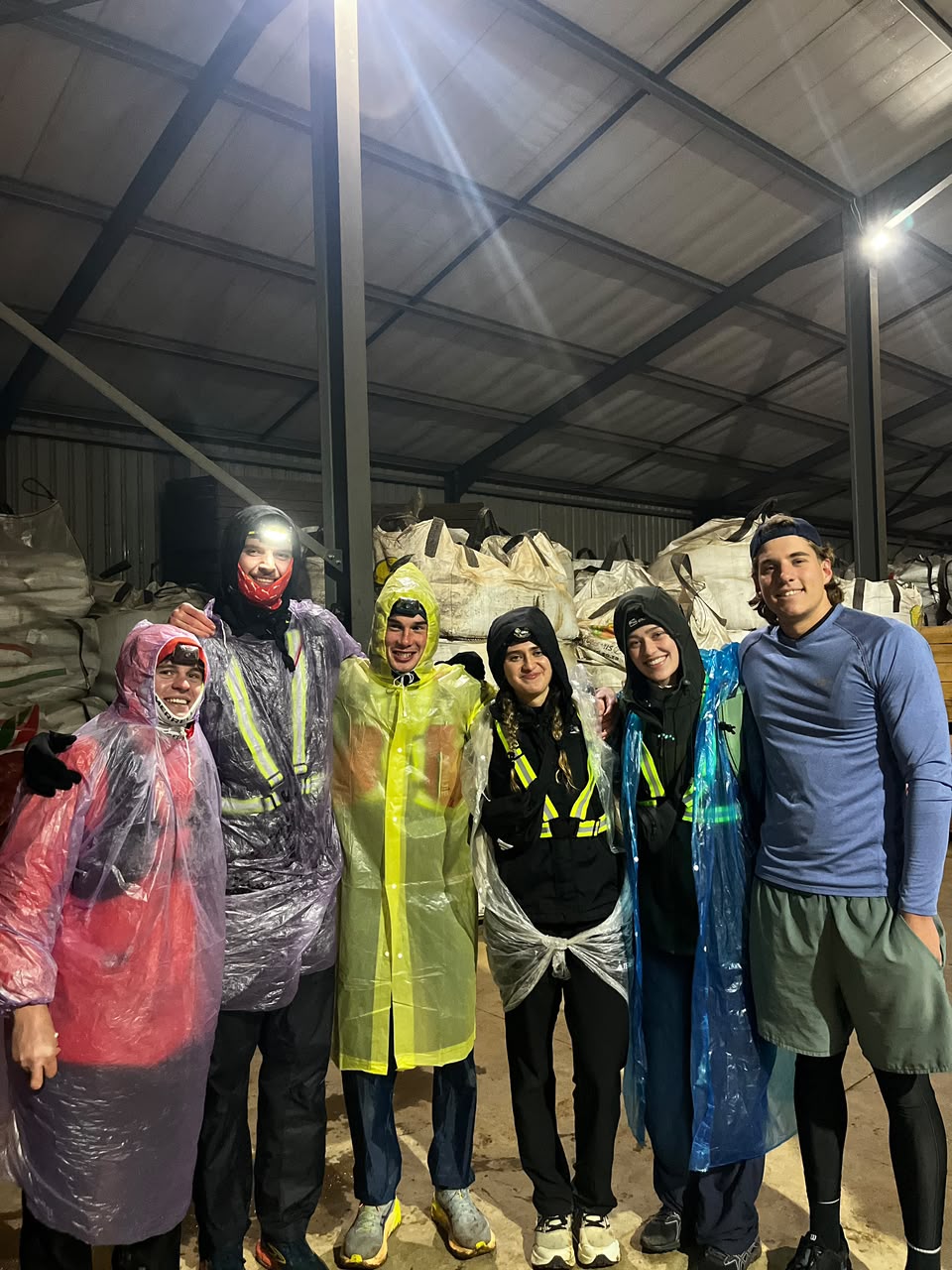
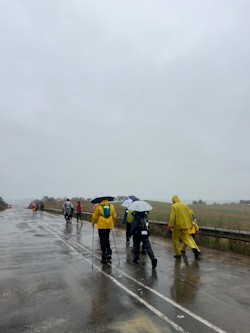 On the 18th and 19th of September, the Wits Adventure and Environmental Society (WAES) took on the Notties 100, a 100km trek held as part of Breaking the Darkness, an endurance event raising funds and awareness for Unchain Our Children, a South African organisation dedicated to combating human trafficking and the exploitation of minors. By the end of the walk, WAES had raised over R26,000 for the cause.
The route was split into four 25km legs, each with a six-hour cut-off. The weather didn't cooperate; rain soaked the first half, and low cloud hung over the second. Of the sixteen who started, three completed the full 100km, while the rest covered significant portions of the route. But organisers say the distance mattered less than what the day represented; camaraderie carried the group from the first kilometre to the last.
At the end of each 25km section, the group paused for the ritual at the heart of the event: lighting a candle and writing a letter addressed to someone still living through the kind of darkness the walk was raised to confront. For the WAES team, the exercise reframed the day. Walking through exhaustion and bad weather gave them a small, deliberate taste of hardship, and a sharp reminder of how far short that fell compared to what survivors of trafficking and exploitation actually endure. The letters became less about the walkers' own fatigue and more an act of solidarity: a way of saying, in writing, that people outside the darkness are thinking of those still inside it.
Unchain Our Children, founded nine years ago, works to combat the prostitution of minors, human trafficking, and other human rights violations, helping bring victims to places of safety; quiet, sustained work that events like Breaking the Darkness exist to fund and spotlight.
For WAES, a society built around adventure and the outdoors, the Notties 100 was a natural extension of what the group does best; taking on physical challenges together. But this walk gave that challenge a purpose beyond the trail. Every blistered foot and rain-soaked kilometre through Nottingham Road became a small, tangible act of solidarity with people whose suffering is rarely seen and even more rarely spoken about.
The society hopes the funds raised will go directly toward protecting vulnerable children and supporting survivors on their path back to safety, and that this story will encourage others to look a little closer at a cause too often left in the dark.
For more information on the Wits Adventure and Environmental Society (WAES) please visit https://www.instagram.com/waeswits?stkn=MWlqZjRodXI5M2c3bA==
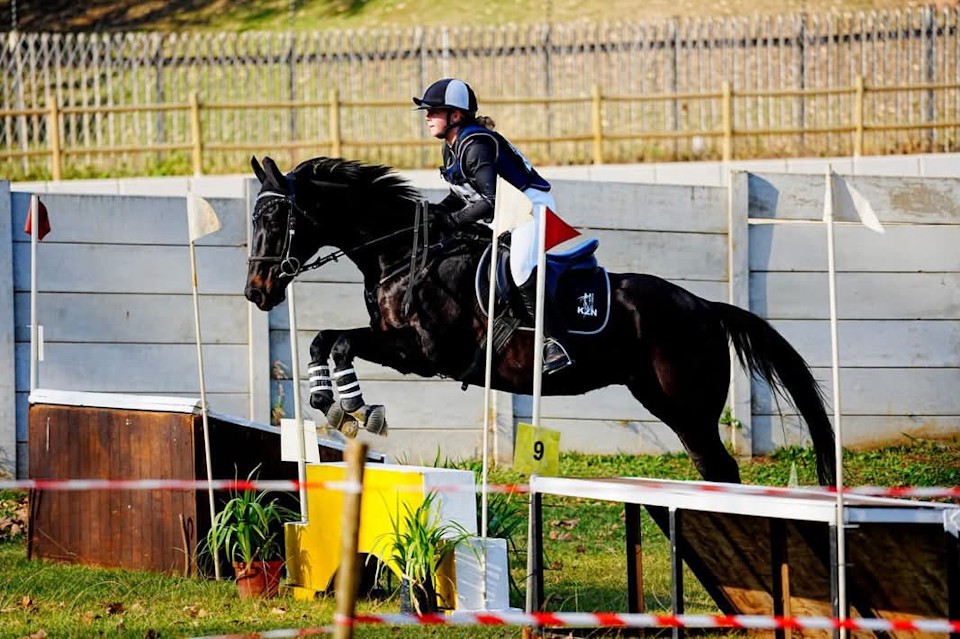
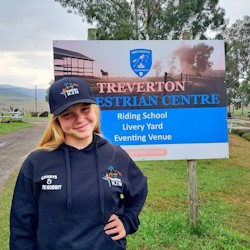 Congratulations to Treverton College Grade 8 learner Charys Rudling, who has been selected for the KZN SANESA Provincial A Team in Show Jumping and Eventing!
Charys and her horse, The Hobbit will compete at the SANESA Core League National Championships at Kyalami Equestrian Park (24–27 September) and the SANESA Eventing National Championships at Inanda Country Base (29 September).
We are incredibly proud of this achievement and wish Charys and The Hobbit the very best.
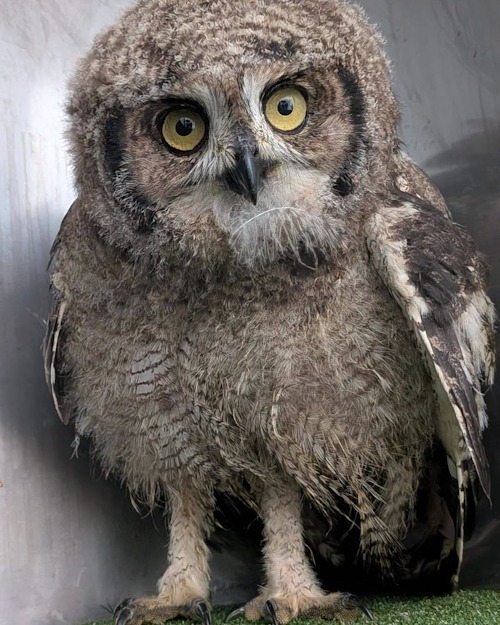 Hoo is this?
This spotted eagle owl was brought to us in late August with a fractured leg.
With the help of Dr Margie Roach and Dr Ijanla Hoffman from uMngeni SPCA, the leg was splinted and this pretty girl was put on strict cage rest to help facilitate the healing process.
And, after a couple weeks in the splint, with careful monitoring and regular veterinary check ups, the go-ahead was given to remove the splint.
Another week or two of cage rest to monitor the use of her leg, before hopefully moving out to a bigger enclosure, one step closer to release.
 OUR NEXT GETAWAY COULD BE AT GRANNY MOUSE!
Spend R1 500 or more at Tyremart Howick and you could win a getaway to Granny Mouse Country House!
HOW TO ENTER:
1️⃣ Spend a minimum of R1 500 at Tyremart Howick.
2️⃣ Like and follow the Tyremart Howick Facebook page.
3️⃣ Leave a review on our Facebook page. Good, bad or even advice, we want your feedback. 💬
4️⃣ Include your invoice number in your review so we can verify your entry. 🧾
Competition closes 3 October 2026.
Winner announced 5 October 2026.
Prize valid until 29 November 2026.
Tyremart Howick - 033 330 2151

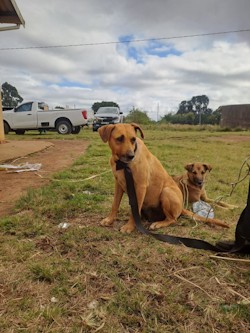 Happy Heritage Day!
I found a few interesting facts about the heritage of dogs in South Africa.
The canine heritage of South Africa is a captivating story of natural survival, ancient migrations, and rugged resilience.
From primitive survivalists that trotted alongside Iron Age pastoralists to powerful homestead protectors bred to face the wilderness, South Africa’s dogs are deeply woven into the country's historical fabric.
The history of dogs in South Africa is anchored by three legendary, distinctly homegrown breeds:
* The Background: Tracing its unbroken lineage back more than 7,000 years, the Africanis migrated south with Iron Age Bantu-speaking pastoralists around 300–600 AD.
* The Vibe: This is an aboriginal landrace, meaning it was sculpted entirely by natural selection rather than artificial human breeding standards. Centuries of roaming the sunny bushveld selected for extreme energy efficiency, natural parasite tolerance, and incredible heat hardiness.
* The Legacy: Known locally by many names (including the Kasi dog or Zulu dog) it is celebrated as a completely healthy, highly intelligent, and structurally perfect masterpiece of nature.
* The Background: When European settlers arrived, they crossed their own hounds with the indigenous, ridge-backed hunting dogs kept by the local Khoekhoe people.
* The Vibe: Fierce, fast, and famously athletic, these dogs were specifically developed to track and corner lions in the African bush, keeping the predators at bay until hunters arrived.
* The Legacy: Recognised for the trademark "ridge" of hair growing backwards down its spine, the Ridgeback stands as a symbol of local resourcefulness and cross-cultural canine evolution.
* The Background: Developed by South African farmers (Boers) to defend remote homesteads from apex predators like leopards, hyenas, and baboons. Its genetic melting pot includes European mastiffs, bulldogs, and ancient local types brought to the region over centuries.
* The Vibe: A massive, physically imposing powerhouse. Despite their formidable guarding instinct and immense strength, they are legendary for their profound gentleness and intense loyalty toward their human families.
No story of South African dog heritage is complete without Just Nuisance a massive Great Dane who lived in Simon's Town during the 1930s and 40s. He is the only dog in history to be officially enlisted in the Royal Navy. Known for escorting sailors on trains and helping them find their way back to HMS Afrikander, he remains an enduring local legend with his own bronze statue overlooking the harbor.
 HERITAGE MONTH: CELEBRATING SOUTH AFRICA’S EVOLVING CUISINES
A Taste of Where We Come From, and Where We’re Going
If it's September, it's Heritage Month in South Africa. A time when the traditions, stories and values that shape our shared identity fall under the spotlight. And for many, few things say heritage quite like food. It sits at the heart of any celebration, bringing us together around the dishes we cook, share and pass on.
So, what does South African heritage taste like? Ask ten people, and you may get ten different answers. Pap and morogo. A Durban curry. Potjiekos. Bobotie. Vetkoek. Koeksisters. Perhaps the unmistakable smell and taste of a braai.
Traditional food has never been only about recipes. It reflects local ingredients, seasonality, resourcefulness and knowledge passed from one generation to the next. For many of us, it also carries a powerful dose of nostalgia. We may often find ourselves hankering after the food our mothers and grandmothers made: the Sunday lunches, family favourites and dishes cooked almost from memory. Some recipes are carefully written down and handed on; others live in instinct, in a pinch of this, a handful of that, and the familiar instruction to cook it ‘until it looks right’.
“Food is one of the most joyful ways we celebrate who we are,” says Yonela Motloung, Marketing Director for Unilever Food Solutions South Africa. “It connects us to family, community and place, but it also keeps evolving as each generation cooks, shares and adds something of its own. That is what makes South Africa’s food heritage so exciting.”
“Our local cuisine has been shaped over generations as ingredients, cultures and cooking traditions have met and influenced one another,” she adds. “What we think of as heritage food today is therefore not a fixed collection of recipes, but a living food culture.”
This is reflected in Unilever Food Solutions’ annual Future Menus report 2026. Its Culinary Roots trend explores how ancestral recipes, indigenous ingredients and time-honoured techniques can remain relevant to today’s diners, with heritage providing a foundation for fresh creativity, not just nostalgia.
And South African chefs have plenty to work with.
“Reimagining heritage should never mean losing the thing that made a dish or ingredient meaningful in the first place,” notes Motloung. “For chefs, the opportunity is to understand those roots, then use their creativity to show diners just how much possibility still exists in the flavours we already know and love.”
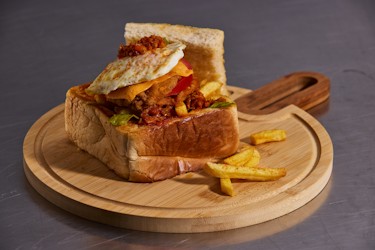
Take the kota. Already an evolving South African street-food favourite, UFS Chef Latoya Marivate’s crispy chicken version layers breaded chicken, spiced chips, cheese, egg and atchar mayonnaise into the familiar hollowed loaf. Recognisably a kota, but with another chapter added to its story.
Or sorghum, one of Africa’s oldest cultivated grains. Take UFS Chef Kimrishka Govender's sorghum malt and honey-glazed short rib. Its earthy maltiness becomes part of a glossy glaze for slow-braised beef. Elsewhere, rooibos and honeybush become a fragrant smoking medium for chicken, while buchu, a South African botanical with its bold blackcurrant and mint character, adds herbal freshness and a hint of citrus to a honey cheesecake.
Even familiar comfort food can shift context, like slow-braised oxtail with butter bean mash and atchar oil, while another dish transforms umfino – maize meal and greens – into a crust for short rib. Familiar flavours remain, but their role on the plate changes.
The same playful instinct is evident in much-loved South African desserts. One contemporary take infuses milk tart with rooibos, whose natural sweetness lets the custard carry less added sugar, balancing its richness especially well alongside citrus. Another recent creation goes further still, combining two South African favourites, milk tart and malva pudding, into one dessert.
“Our food heritage belongs in the present as much as it belongs to the past,” concludes Motloung. “When we celebrate the ingredients, dishes and stories that make South African food distinctive, and give a new generation of chefs room to build on them, we keep that heritage alive, relevant and worth sharing.”
Download your copy of the Unilever Food Solutions Future Menus 2026 report HERE.
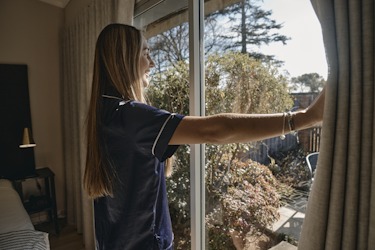 Somewhere along the way, rest has become something we have to earn.
Gone are the days when stores closed at 5pm on weekdays and 1pm on Saturdays, when long weekends meant a break, not a full social calendar of hosting braais or a busy destination trip, when Sunday afternoons were for a well-earned nap and tea on the patio, and work waited until Monday because the office was, quite literally, closed.
Nowadays, we schedule it, justify it, and then feel faintly guilty about it once it's done. Ask most people what they did over a long weekend and you'll notice how quickly the answer turns into a checklist of activities: the hike completed, the market visited, the box ticked. Tell someone you did nothing, and you may well be greeted with total disbelief.
Doing nothing, it seems, needs a chaperone.
“It’s a shame that genuine rest needs an excuse,” says Onwaba Gonyora, Director of Brahman Hills, a five-star hospitality and wellness destination in the heart of the KwaZulu-Natal Midlands. “By rest, I don’t mean laziness or simply lying around. I mean choosing to slow down, be still and give yourself permission to properly switch off.”
The Italians have a phrase for it, dolce far niente, the "sweetness of doing nothing". The Danes have hygge, a sense of comfort, contentment and ease found in simple, unhurried moments. Different cultures may describe it differently, but the idea is much the same: rest and leisure have value and are a worthwhile pursuit.
Modern life doesn't make this easy. We carry our work in our pockets now, and our leisure has started to look suspiciously more like work: optimised, tracked, photographed, posted. Holidays are planned like projects, with itineraries packed so tightly that people come back needing a holiday from their holiday.
And somewhere in all that planning, the actual point of rest gets lost.
"So, what does doing nothing well actually look like? I'd argue it starts with permission," suggests Gonyora. "Not the permission you ask for from a boss or a calendar, but the internal kind, the quiet decision that an afternoon spent watching the light change over a garden, or a morning with nowhere particular to be, has value in itself. It doesn't need to produce anything. It doesn't need a caption."
"It also takes a particular kind of environment," she adds. "Doing nothing well is hard in a cluttered, noisy, demanding space, which is probably why so many of us reach for nature when we finally do slow down. There's a reason places like the Midlands, or any stretch of quiet countryside, pull people out of cities for a break. Space seems to give permission that willpower alone often can't."
The art of true rest takes practice, though. “The first few hours can be the hardest,” Gonyora confesses. “I have personally found that the mind keeps reaching for its to-do list like a phantom limb. It’s usually only once that noise finally quietens that we start to remember what unstructured time actually feels like.”
That, she believes, is why the spaces we choose to rest in matter. Sometimes stepping away from the familiar is what allows us to properly reset.
“It’s something we think about a lot at Brahman Hills,” says Gonyora. “We’ve deliberately created spaces where people don’t have to be constantly doing something.
If you can, get away. Head for the countryside, switch off and give yourself a few days with nowhere you need to be and nothing you need to achieve. If you can’t, start smaller. Leave one Saturday unplanned. Don’t fill every hour. Put the phone down, sit outside, take a nap, read a book, or simply do nothing for a while.
Rest doesn’t have to be earned. Perhaps we just need to get better at allowing ourselves to have it.
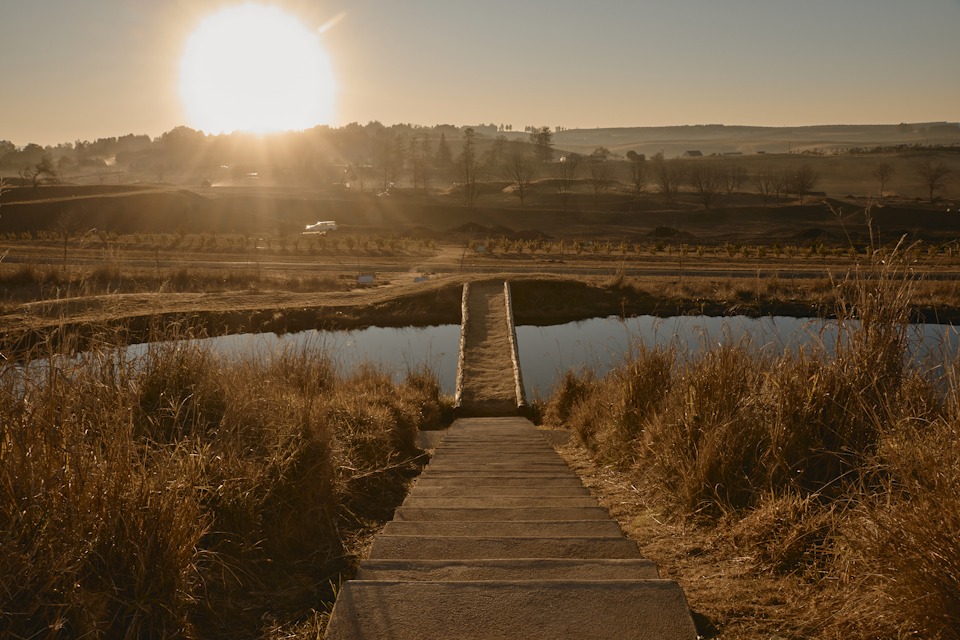
 We still have tickets available!
Doors open: 5:30 pm
Show starts: 7:30 pm
All funds raised from ticket sales, the live auction, and raffle will go directly to Midlands Hospice.
Enjoy relaxed, fun evening with a variety of food on offer. A fully stocked bar will be available throughout the evening, and live music by Sam Hartman will set the mood.
 Whether you’re heading out on the water or stepping into the office, we’ve got you covered with menswear built for comfort and style.
What’s In Store:
• Sharp check and stripe button-down men's shirts | S to 7XL for R395.00
• Fishing Shirts designed for adventure | S to 3XL R450.00 to R595.00
• Caps at R250.00, Hats R150.00, and UV-blocking Sunglasses R345.00 to R595.00.
*𝘗𝘳𝘪𝘤𝘦𝘴 𝘷𝘢𝘭𝘪𝘥 𝘚𝘱𝘳𝘪𝘯𝘨 2026
Custom Corporate Branding Available! Promote your business. Add your company logo for custom staff uniforms or client gifts.
Visit 40 Main St, Howick - with a 𝙁𝙖𝙘𝙩𝙤𝙧𝙮 𝙎𝙝𝙤𝙥 in store!
Out of town? Let us courier your order straight to your door.
Have questions? WhatsApp queries & orders 𝟬𝟲𝟯 𝟭𝟱𝟳 𝟬𝟭𝟵𝟬
Email This email address is being protected from spambots. You need JavaScript enabled to view it.

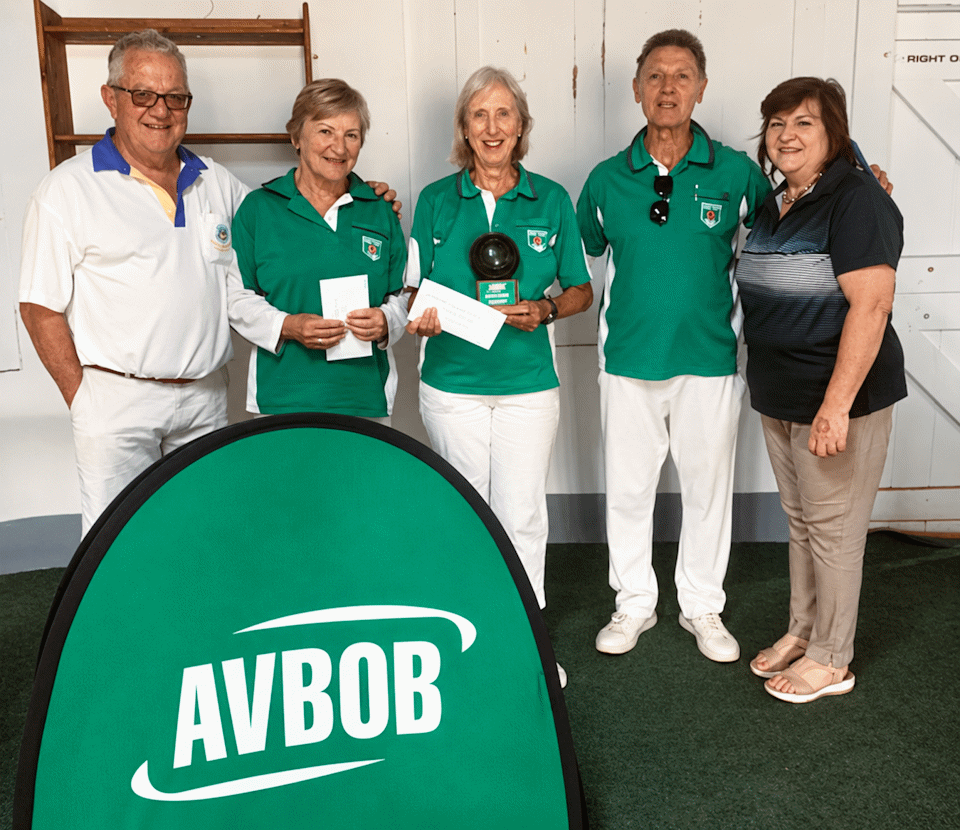
 A " Two Bowl Trip " Competition, sponsored by AVBOB, was held at UWBC, on Thursday 24 September 2026, with generous prizes from our sponsor.
A huge appreciation goes to Veronica and her amazing AVBOB Team, who helped make the event go seamlessly.
Fellow bowlers from our local bowling clubs as well as our loyal members from UWBC, contributed to a FUN filled day, to celebrate Heritage Day.
Congratulations to our Winners: Debbie Strobie and Di Smythe & Barend van der Merwe. (Image below.)
Second Prize went to Clive Kemp, Fin Hamilton & Garth Whitehead.
Plate Prize went to Megan Snubbs, Cathy Sandals & Andrew Sandals.
We welcome new players to UWBC. Our regular tabs days are Tuesday mornings 8:30 am, Wednesday and Saturdays afternoons 1 pm, with club colours or white to be worn on Saturdays.
Please save the dates for forth coming events:
Pam Golding Sponsored FUN Day / Saturday 24th October 2026, earlier start 9h30.
Halfway Toyota sponsored Mixed Pairs / Saturday 7th November 2026
J Leslie Smith Attorneys sponsored 2-4-2 / 17th November 2026.
For all enquiries related to club competitions please contact Ann Cacho at 071 676 5591
 Create a nativity collection that grows with you.
Choose the pieces you love now and add to your collection over time. Build a beautiful, handcrafted heirloom to bring out year after year.
Orders close 31 October for Christmas 2026.
Contact Gill by WhatsApp on 082 254 4798 to order.
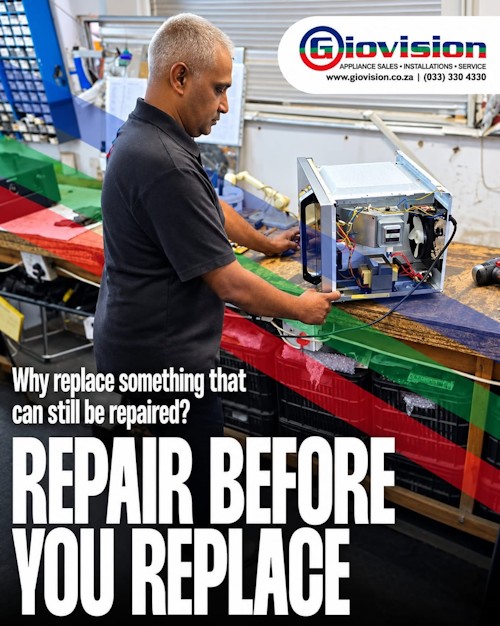 Repair Before You Replace!
Why spend more when a simple fix could bring your appliance back to life?
From kettles and microwaves to TVs and speakers many “broken” electronics just need expert hands, not a replacement.
Let us take a look first… you might save BIG.
Giovision: Keeping your home running and your budget happy.
38 Main St, Howick | 061 521 6217
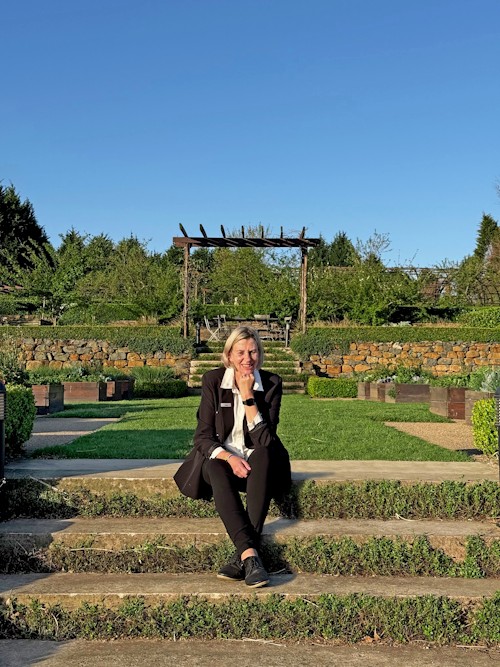 Brahman Hills has appointed Anja Bosken as its new General Manager.
Bosken, who brings more than four decades of experience with her, joins at a critical point in the Brahman Hills story, as the property continues to shape its vision as a Sanctuary of Serenity, Wellness and Excellence, with the 22-hectare Serenity Garden forming a defining part of its next chapter.
Her hospitality career began in 1984 as a cashier at a five-star hotel, before she worked her way through the industry with the guidance of mentors, whom she credits as central to her success. In 1997, she became Sun International’s first female General Manager, taking the helm of the Sun City Main Hotel.
Bosken’s career later took her abroad, first to the UK as Operations Manager for Providence Hospitality, then to Zanzibar, where she spent five years helping to complete, open and establish Ycona Luxury Resort, a five-star, 40-villa property with four restaurants and a spa. Her leadership during this broader period of her career was also recognised when she was named General Manager of the Year by Three Cities.
Her appointment marks a return to South Africa after a decade of working internationally, and to Brahman Hills, which resonated with her from the outset. "It is a beautiful property with extraordinary gardens, a wonderful 'sense of place' and enormous potential," says Bosken. "But what really drew me were the values of the business. They align very closely with my own, particularly the importance of people, genuine hospitality and creating meaningful experiences for guests."
She believes that luxury hospitality is not only about beautiful surroundings, but about how you make people feel. "I want our guests to feel genuinely welcomed, cared for and valued, and for our team to take enormous pride in creating those experiences. Over the next few years, I hope to assist Brahman Hills in realising its full potential while always retaining the warmth, character and authenticity that makes it so special."
Beyond the guest experience, Bosken notes that developing young talent has been one of the most rewarding aspects of her career, and something she intends to continue with her new team.
"Seeing someone discover their potential, grow in confidence and start believing that they can achieve more is incredibly special to me," she adds. "If I can play even a small part in helping them build a career and a better future for themselves, then I feel I have achieved something truly worthwhile."
She highlights that attracting and retaining skilled, passionate people is one of the biggest challenges facing the hospitality industry, and believes the sector needs to give young people more opportunities to build a career.
Looking ahead, her focus will be on elevating service, refining the property's look and feel, and growing its midweek business. She sees this as a key opportunity, alongside expanding the property's international market and introducing more overseas guests to the Midlands.
Born in Germany, Bosken grew up in Cape Town, which she considers home, and now, after a decade abroad, is settled back in South Africa. Outside of work, she is an avid cyclist who enjoys getting out on her e-bike, along with time at the gym and a good book when she can find the time. A self-confessed lover of good food and wine, something she calls "an occupational hazard" after so many years in the industry, she says it feels "wonderful to be home."
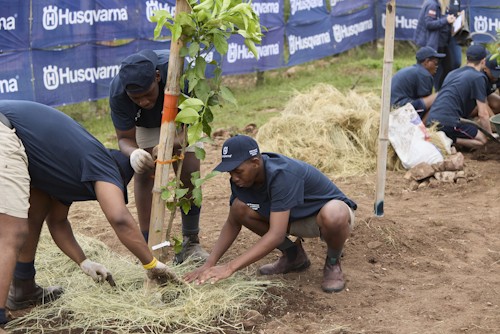 5 KZN schools go head-to-head in Arbour Month Challenge
School pride, teamwork and a little healthy competition came alive in Monteseel this Arbour Month when learners from five KwaZulu-Natal schools swapped their classrooms for the great outdoors. Their mission? To plant fruit trees that will help establish a space for ongoing community engagement, personal development and learning, with opportunities for training in tree propagation and caring for the land, all while competing for the title in the annual Husqvarna South Africa Schools Challenge.
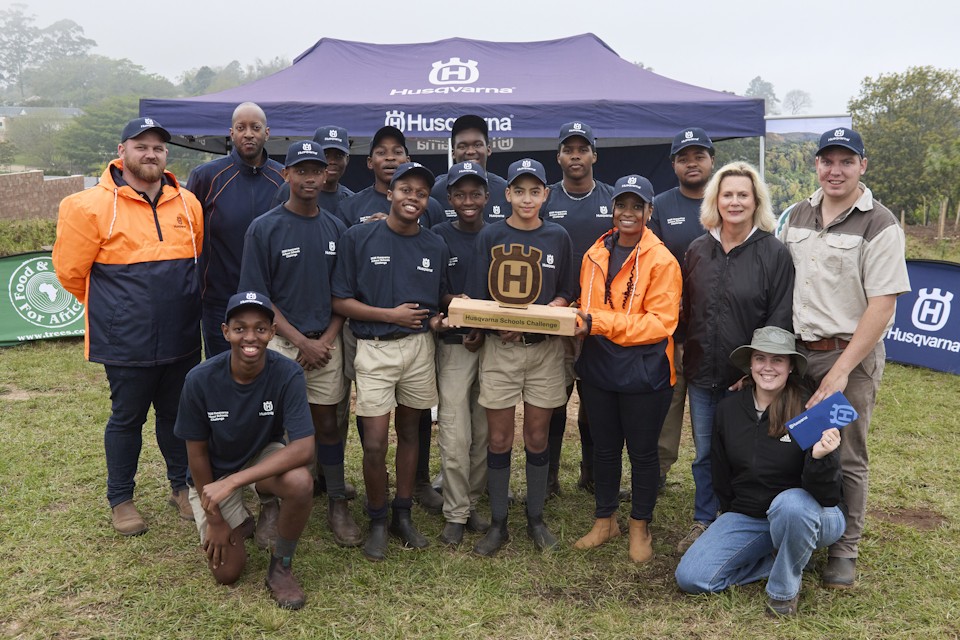
Hosted at Greenheart Organics in partnership with Food & Trees for Africa, the 2026 event brought together teams from Durban High School, Weston Agricultural College, Glenwood High School, Westville Boys’ High School and Hillcrest High School for an afternoon that tested their teamwork, speed, efficiency and tree-planting skills.
First introduced in 2024 as a contest between Durban High School and Weston Agricultural College, the challenge has grown into a five-school event, with new teams adding to the competition and the school spirit on display.
And this year, the ante was upped. In the previous two editions, teams competed to dig holes for the trees. This time, they took on the full planting process, from digging and adding compost to planting, mulching and watering. Ground preparation made the soil softer to work with, but the additional tasks demanded more coordination and care from each team.
While there could only be one winner, the purpose went beyond school honours. For learners, it was a chance to contribute something practical while learning what it takes to give a newly planted tree a good start.
After a fiercely contested challenge, Weston Agricultural College was crowned the 2026 champion, walking away with a Husqvarna blower and a R5,000 voucher to redeem at Husqvarna’s online store. Durban High School secured second place and a R5,000 voucher, while Hillcrest High School finished third and received a R2,500 voucher.
Every participating school also went home with a fruit tree to plant on its grounds, allowing learners to put their new skills into practice beyond the competition.
Kathy Boast, an educator at Weston Agricultural College, said the team was incredibly proud to take the title. “The learners really threw themselves into the challenge and worked exceptionally well as a team. Of course, as previous winners and runners-up, they came here wanting to win. But what made the experience particularly special was knowing that they were also contributing to something that will have an impact long after today.”
Husqvarna South Africa Marketing Manager Timothy Isabirye said the event's evolution reflects the company’s desire to make its annual Arbour Month initiative more meaningful.
“Every year, we ask ourselves how we can build on what we did before and give learners more to take away from the experience,” he explained. “This is about giving young people the chance to get outside, put their hands in the soil and realise that planting and caring for trees is something we can all take part in.”
And the partnership with Food & Trees for Africa connects the event to an organisation that works across South Africa through tree-planting, food-security and environmental programmes.
“These fruit trees have been planted to benefit the community,” Isabirye noted. “But reaching that point takes time, suitable growing conditions and ongoing care. Planting day is the start, and we want learners to see that looking after a tree matters just as much as getting it into the ground.”
“The trophy and the competition are the fun part,” he added. “We hope learners leave proud of what they’ve done, with a new practical skill and an understanding of how they can contribute to making their world a better place.”
 Midlands Hospice offers affordable rentals on essential medical equipment to support home-based care. Whether it's a walker, wheelchair, or shower chair — we make it easier for patients to stay safe and comfortable at home.
Walkers
Commodes
Wheelchairs
Shower Chairs
Crutches
… and more!
Equipment is available at our Howick office
Contact Linda at 033-3305257
Email: This email address is being protected from spambots. You need JavaScript enabled to view it.
Proceeds go directly toward funding our hospice services — so every rental helps us care for more families in need.
 The Future of Healthcare Is Human, Not Artificial
When most of us hear the words artificial intelligence, we imagine robots replacing people. In healthcare, the reality is far more reassuring. AI is transforming the way doctors diagnose disease, but it isn’t replacing the expertise, empathy or judgement that patients depend on.
For Dr Aobakwe Segwe, radiologist and co-founder of the Centre of Medical Imaging (CMI), the future of medicine isn’t about choosing between technology and people. It’s about using both to deliver better care.
Today, AI can analyse thousands of medical images in seconds, detect subtle abnormalities and assist specialists in identifying patterns that might otherwise take much longer to review. In fields such as cardiac imaging, these intelligent systems are already helping radiologists work more efficiently and accurately.
But there’s an important distinction.
“AI provides an additional layer of clinical support, but the final interpretation and responsibility always lies with a specialist,” says Dr Segwe.
A scan is never just a picture. Every image belongs to a person with a unique medical history, symptoms and life circumstances. While AI may recognise a pattern, it cannot understand the bigger clinical picture, have difficult conversations or help someone navigate the uncertainty that often comes with waiting for a diagnosis.
The moments patients remember
Anyone who has ever waited for the results of an MRI, CT scan or X-ray knows that the hardest part is often the waiting. Behind every scan is someone wondering whether their life is about to change.
Dr Segwe believes those moments remind us why compassion remains one of medicine’s most powerful tools.
“The way someone explains the procedure, answers your questions and recognises your anxiety can stay with you long after the appointment is over,” she says.
As technology takes over repetitive administrative and analytical tasks, it may actually give healthcare professionals something increasingly valuable: more time to connect with patients. Rather than replacing doctors, AI has the potential to free them to focus on the conversations, reassurance and clinical decision-making that machines simply cannot provide.
Closing the healthcare gap
Across Africa, access to specialist healthcare remains one of the biggest challenges. Many communities have limited access to radiologists, creating delays in diagnosis and treatment.
Digital imaging and connected healthcare systems are beginning to change that. Medical images can now be reviewed remotely by specialists in different cities or regions, while AI can help prioritise urgent cases so patients who need immediate attention are identified sooner.
Yet Dr Segwe cautions against believing technology alone will solve the continent’s healthcare challenges.
She believes Africa also needs to invest in research based on its own people, diseases and healthcare realities.
“Research should reflect the people it serves,” she explains. “Developing African evidence allows us to improve diagnosis and treatment based on our own patient populations rather than relying solely on international data.”
That means creating medical knowledge that is relevant to African communities, ensuring better diagnosis and ultimately better patient outcomes.
Smarter, not simply newer
In a world fascinated by the latest innovation, Dr Segwe believes healthcare should ask a different question before investing in expensive technology: Will it genuinely improve patient care?
Sometimes the answer isn’t buying an entirely new machine. Upgrading software or improving existing equipment can often deliver meaningful clinical benefits while making healthcare more accessible and affordable.
For patients, that’s encouraging news. It shifts the focus away from impressive technology and back to what really matters: receiving accurate diagnoses, timely treatment and compassionate care.
A future built on trust
The healthcare of tomorrow will undoubtedly look different. AI, advanced imaging and digital systems will continue to reshape how medicine is practised. But according to Dr Segwe, the heart of healthcare should remain unchanged.
The future isn’t artificial. It’s profoundly human, with technology working quietly in the background while skilled clinicians do what they’ve always done best: care for people with knowledge, empathy and trust.
For more insights from Dr Aobakwe Segwe, visit draobakwesegwe.com or follow her professional updates on LinkedIn.