 “Silalele – We Hear You”
As South Africa marks Teen Suicide Prevention Week (8 -14 February), the South African Depression and Anxiety Group (SADAG) launches its national campaign, “We Hear You – Silalele”. This powerful call to action urges parents, teachers, caregivers, and friends to listen, without judgement, create safe spaces for conversation, and support teens who may be at risk.
Teen Suicide remains a serious and growing public health concern in South Africa. Research shows that nearly one in five high school learners have attempted Suicide at least once. Around 24% of youth in Grades 8 to 11 report prolonged feelings of Depression and hopelessness - key risk factors linked to suicidal thoughts and behaviour.
“These statistics represent real young lives and families,” says Roshni Parbhoo-Seetha, SADAG’s Project Manager for Education. “Too many teens tell us they do not feel heard or taken seriously. ‘We Hear You – Silalele’ is about creating spaces where teens feel genuinely listened to, without judgement.”
Teens from across the country who have contacted SADAG’s Suicide Helpline have shared what they are going through:
▪ “Every time I try to talk about how I’m feeling, I get told I’m overreacting or being dramatic. So now I just keep it to myself.”
▪ “My parents think because I’m quiet, I’m fine. But the truth is, I just don’t feel like explaining myself anymore because they won’t really listen.”
▪ “It’s easier to talk to a stranger on a helpline than to talk to someone at home. At least they don’t judge me or interrupt me.”
▪ “Sometimes I don’t need advice. I just need someone to hear me and not turn it into a lecture.”
“Adults and parents need to walk alongside their children by actively listening when they reach out for help,” says Cape Town Clinical Psychologist, Jody De Reuck. “Children’s concerns are valid. Dismissing bullying, shame, or emotional pain by saying ‘you’ll get over it’ can cause real harm.” To help adults and educators start conversations that genuinely connect, SADAG encourages creating intentional spaces for discussion, removing distractions such as phones or televisions, maintaining eye contact, and asking open-ended questions. Teens often do not need immediate solutions - they need calm, empathetic listening that allows them to feel safe enough to keep talking.
It is also important to notice changes in behaviour such as withdrawal, increased irritability, a decline in school performance, or expressions of hopelessness. These may be signs of Depression or suicidal thoughts. “We know that undiagnosed or untreated Depression is a leading cause of Teen Suicide,” says Parbhoo-Seetha. “Knowing the warning signs and encouraging teens to speak to a trusted adult, teacher, school Counsellor, or family member can help save a life.”
During Teen Suicide Prevention Week, SADAG will share resources, videos, and practical tools via its website toolkit and social media platforms. By learning the warning signs of Depression and Suicide, we can help prevent Teen Suicides. Visit www.sadag.org for brochures, posters, conversation guides, and online resources.
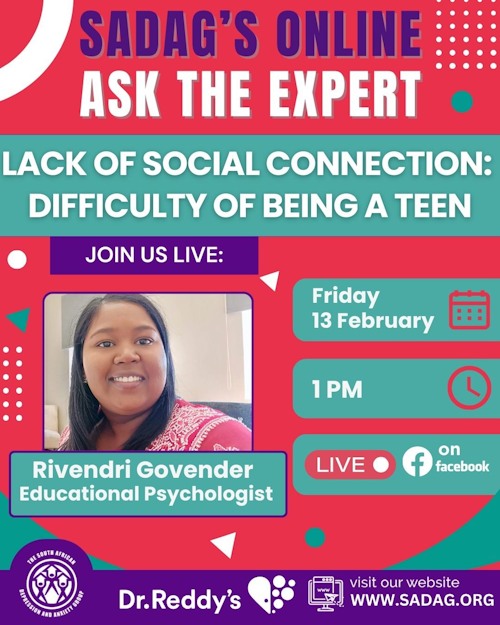
On Friday, 13 February at 1pm, SADAG will also host a Facebook Live discussion on The Lack of Social Connection: Difficulty of being a Teen. This conversation aims to support parents, educators, caregivers, and youth leaders, and will be led by Educational Psychologist Rivendri Govender.
SADAG urges anyone concerned about a teen who may be struggling to seek help without delay. Support is available 24 hours a day through the SADAG Suicide Crisis Helpline on 0800 567 567 or by sending an SMS to 31393 for a Counsellor call-back.
“Teen Suicide is preventable,” says Parbhoo-Seetha. “But it requires our commitment to listening without judgement and truly hearing our youth. When teens say, ‘I don’t feel heard,’ we must work towards changing that to ‘I feel supported. I feel listened to.’ Silalele. We hear you.”
